
Clarity: FAA Marking & Lighting AnalysisAutomated FAA obstruction marking and lighting reports
Clarity decodes the FAA marking and lighting recommendations buried in FAA determinations, and forecasts marking and lighting for structures that have not yet been filed with the FAA.
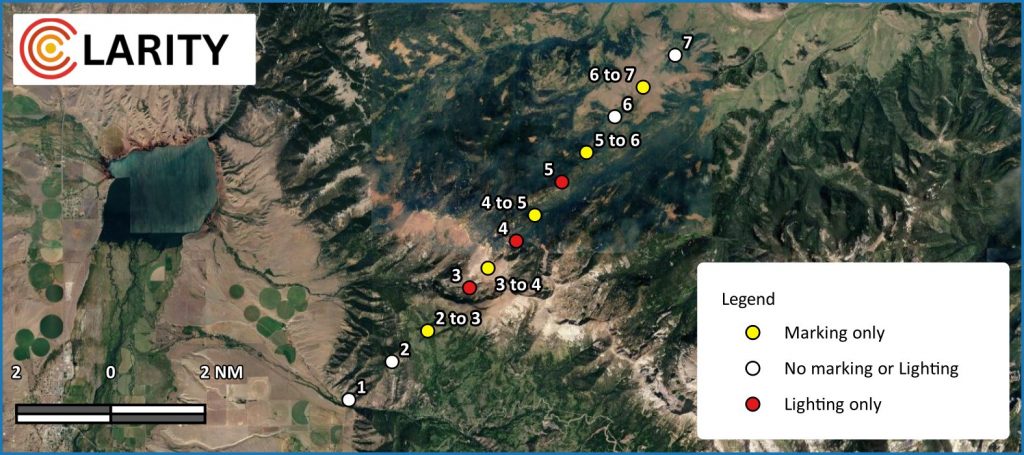
When an FAA determination recommends that a structure be marked and/or lighted, it leaves out the crucial details. What is the exact lighting unit required? Do you need multiple levels of lights? What size should your marker balls be?
Based on the latest FAA Advisory Circular, Clarity delivers a report that states explicitly what marking and lighting is required, going well beyond the “Red lights” you typically see on an FAA determination.
Forecasting Marking/Lighting
The FAA can take upwards of three months to issue a determination. Clarity gives you an instant analysis of the structure so you can prepare for the marking and lighting recommendation ahead of time, rather than being caught off guard and delaying construction. Forecasts are based on the most recent version of the FAA’s Advisory Circular.
Analysis with an FAA Determination
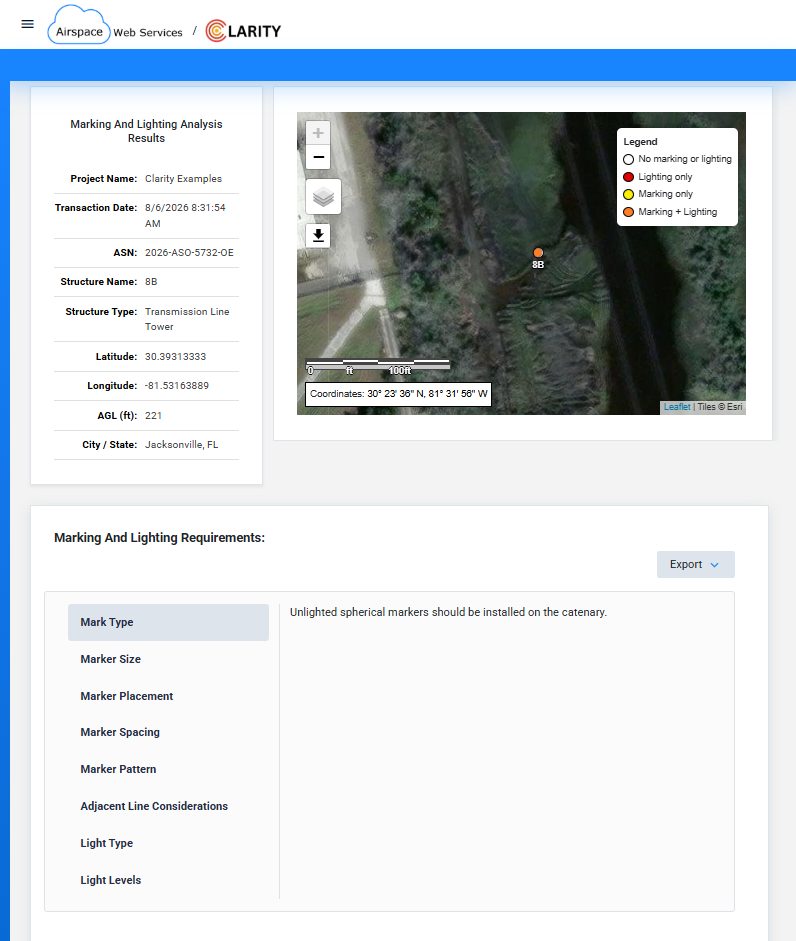
Once a determination has been issued, simply enter the FAA Aeronautical Study Number (ASN) into Clarity and it produces the full analysis.
How It Works
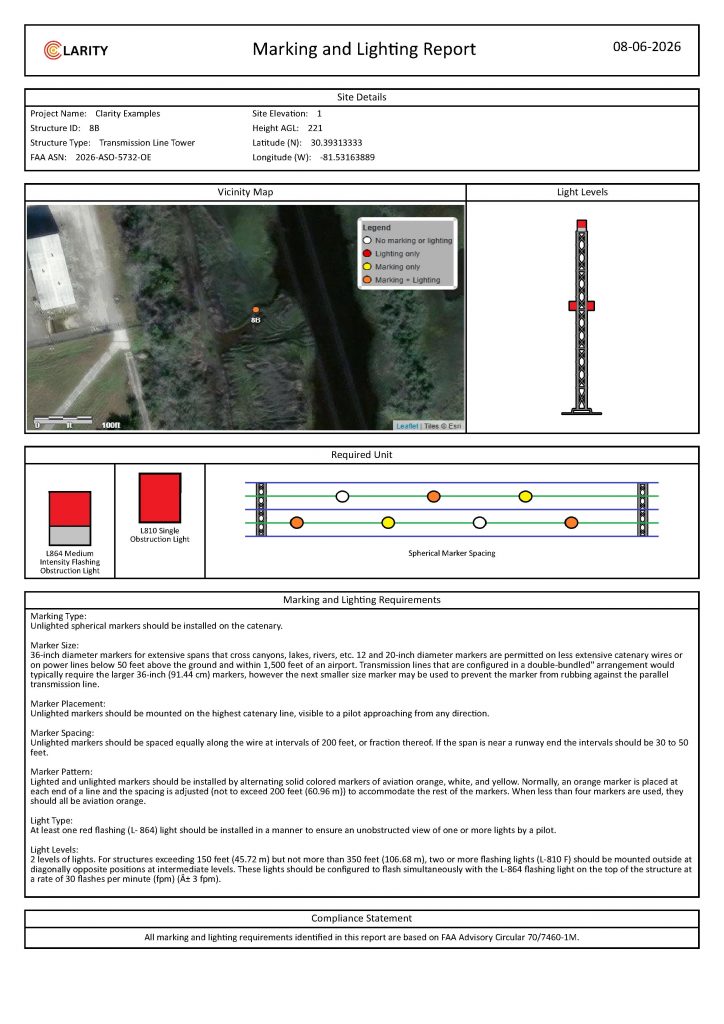
Clarity produces a summary of everything a structure needs to be FAA compliant, including the specific:
- Marker type
- Marker size
- Marker placement
- Marker spacing
- Light unit
- Light levels
- Total number of lights
- Paint configuration
It also generates a PDF report with figures of the structure showing the appropriate marking and lighting and the specified light unit or marker type.
Comparison
A standard FAA determination gives you a single line. Clarity turns that same determination into a complete, marking and lighting report for each structure you analyze.

Airspace Cloud
Effortlessly analyze and gain better situational awareness of Title 14 CFR Part 77 requirements. Explore boundaries, assess potential impacts, and plan with confidence.
Rural Tower
Easily analyze rural towers for compliance with Section 2110 tower markings that are not subjected to Title 14 CFR Part 77 notice requirements.
Coordination Zones
Analyze base station(s) that operate in the C-Band spectrum for FAA coordination requirements.